
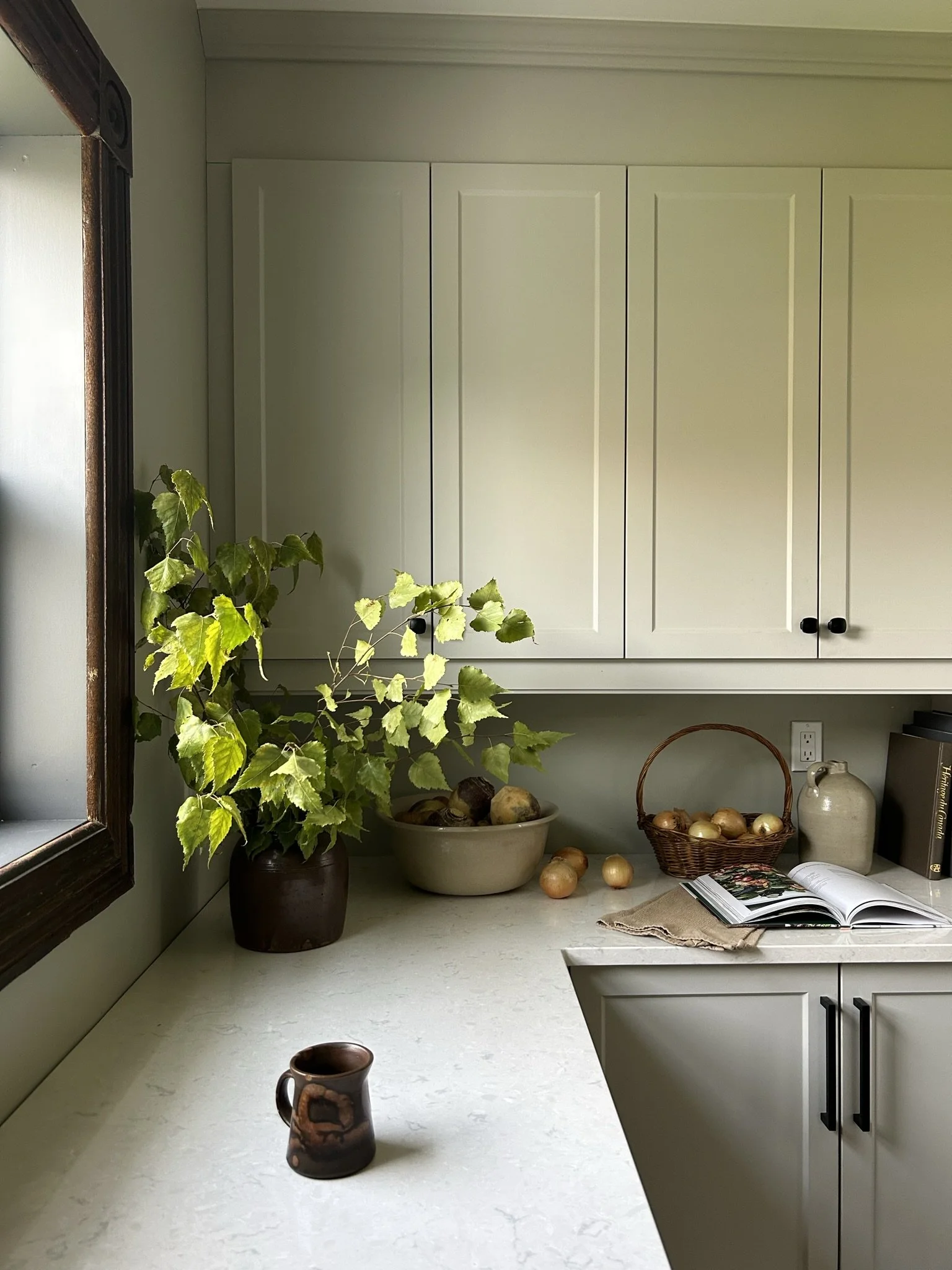
November has a way of pulling everyone into the kitchen. Soup on the stove, something in the oven, the kettle going more than usual. The evenings are darker and colder, and the kitchen is where everyone ends up.
When you spend more time in a room, you start to notice it differently. The things that work. The things that don’t. The little frustrations you’ve stopped seeing because you walk past them every day.
This is a good time of year to pay attention to them.
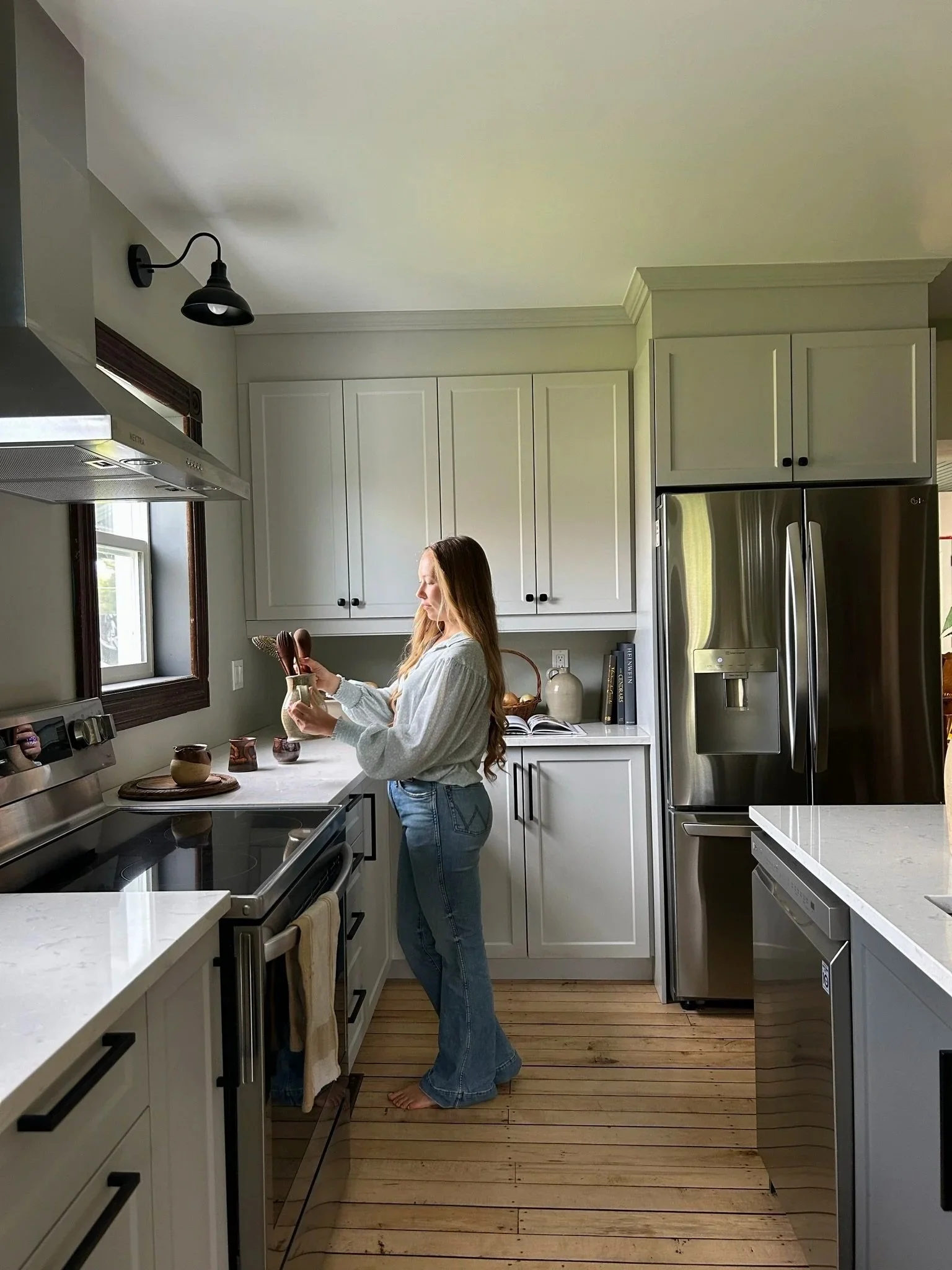
Notice how you actually use it
Next time you’re cooking, take note of a few things:
Where do the grocery bags land when you come in? If the answer is the one clear spot on the counter, that’s telling you something.
Where does everyone stand while you cook? In an old house, people tend to gather right where you need to be. A spot for them to sit, just out of the way, can change how the whole room feels.
Which cupboard do you never open? And which one do you wish you had?
What’s always on the counter? The toaster, the mixer, the coffee maker. If they live out because they have nowhere else to go, that’s a storage problem, not a clutter problem.
How does the room feel at 4:30? This time of year, it’s easy to see which corners go dark first.
Kitchens in century homes were rarely designed for how we cook and gather today. Storage is almost always part of the conversation, and we wrote more about that in Why Storage Is Always Part of the Plan in a Century Home Renovation.
Notice what’s working, too
It’s easy to only see what bothers you. But a kitchen in an old house usually has something worth keeping.
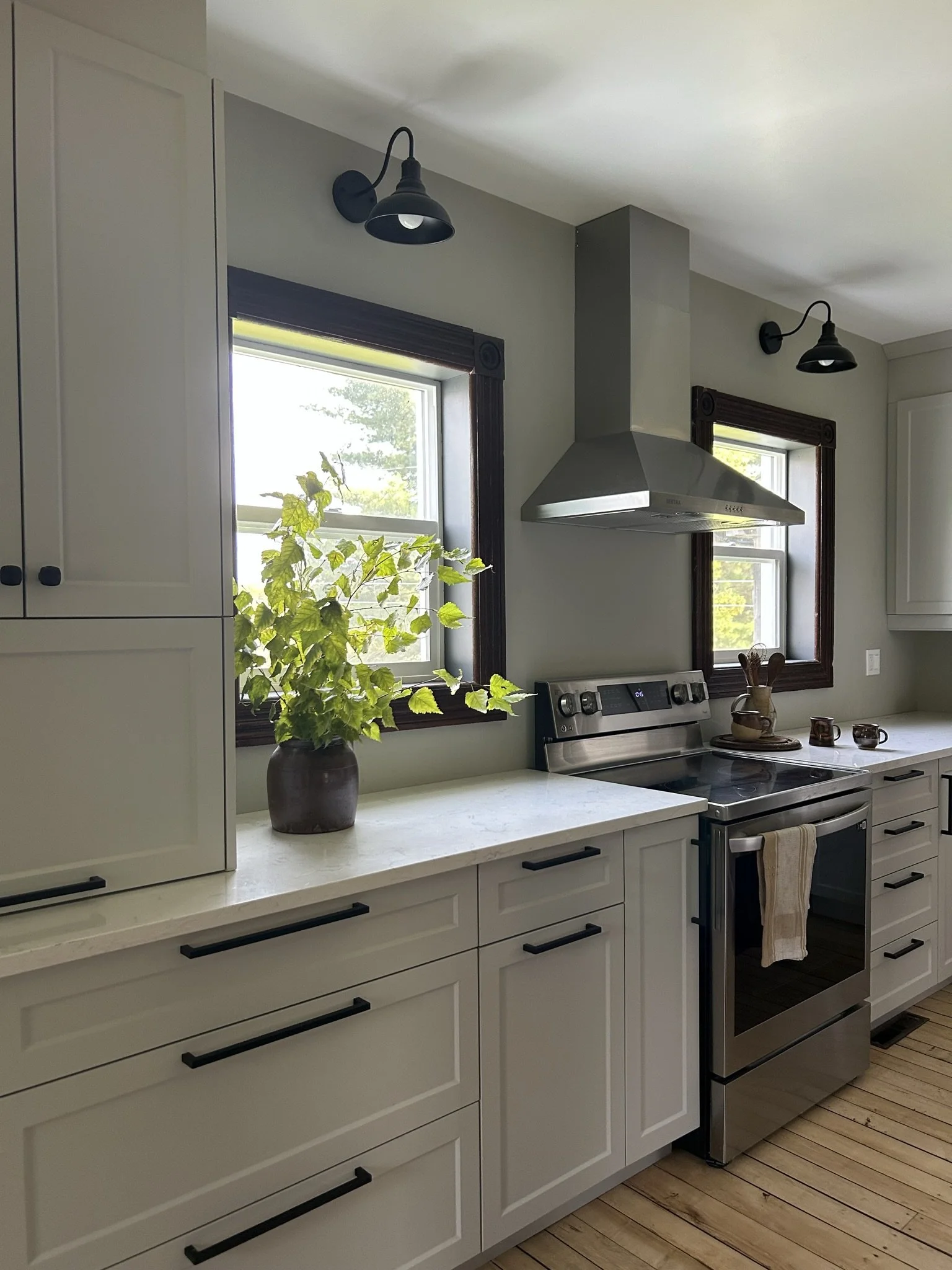
Maybe it’s the window over the counter where the light comes in every morning. The old floorboards, worn in front of the stove. The trim around the doors that nobody would build that way today.
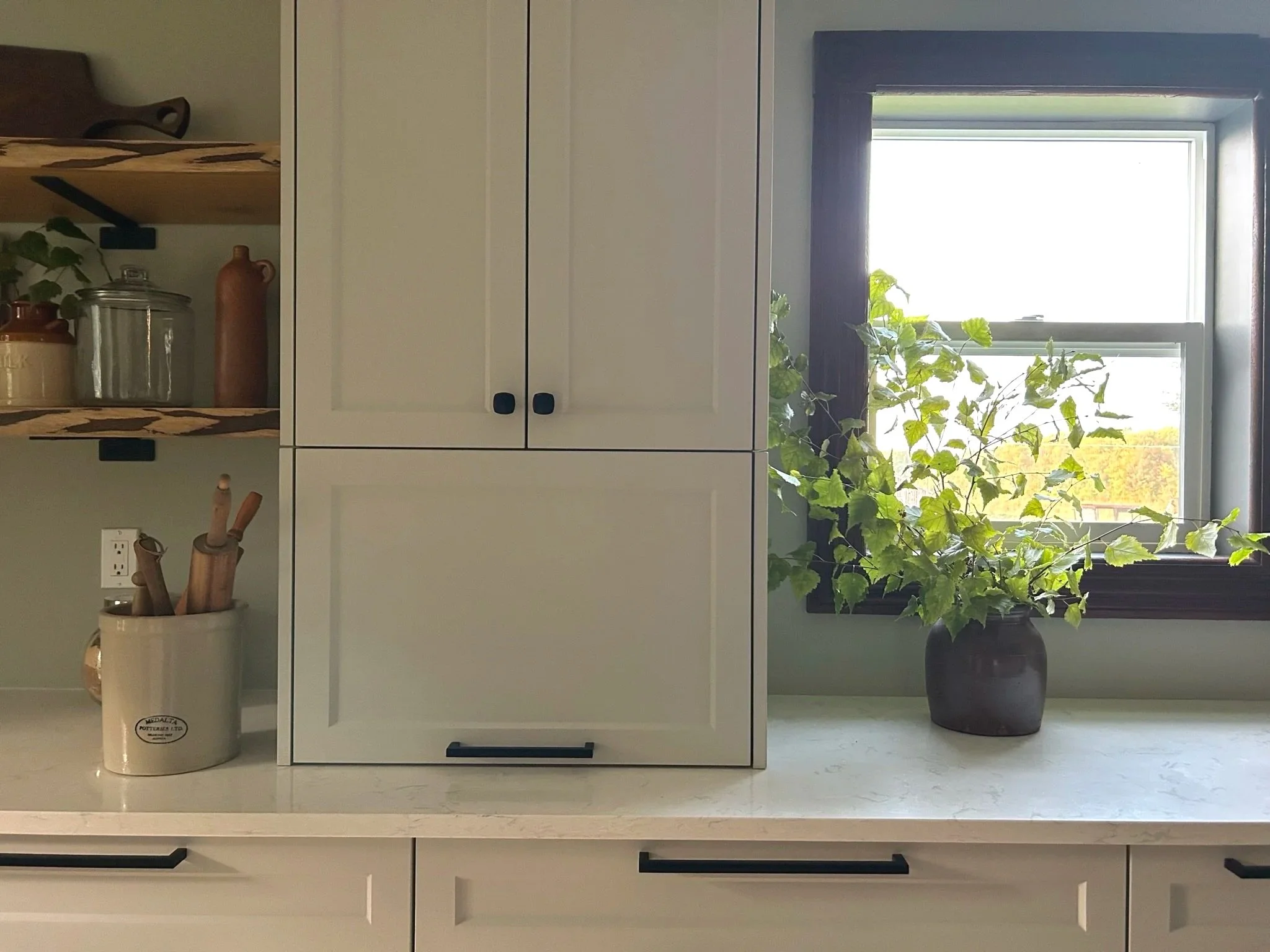
In this kitchen, the dark wood trim around the window sits right next to new painted cabinets, and the old floorboards run underneath it all. The old and the new, side by side, and neither one feels out of place in this Rockburn, Quebec home.
Those details are worth writing down before anything changes. If you want to read more about why we work this way, How We Approach a Century Home Renovation is a good place to start.
The things you don’t see
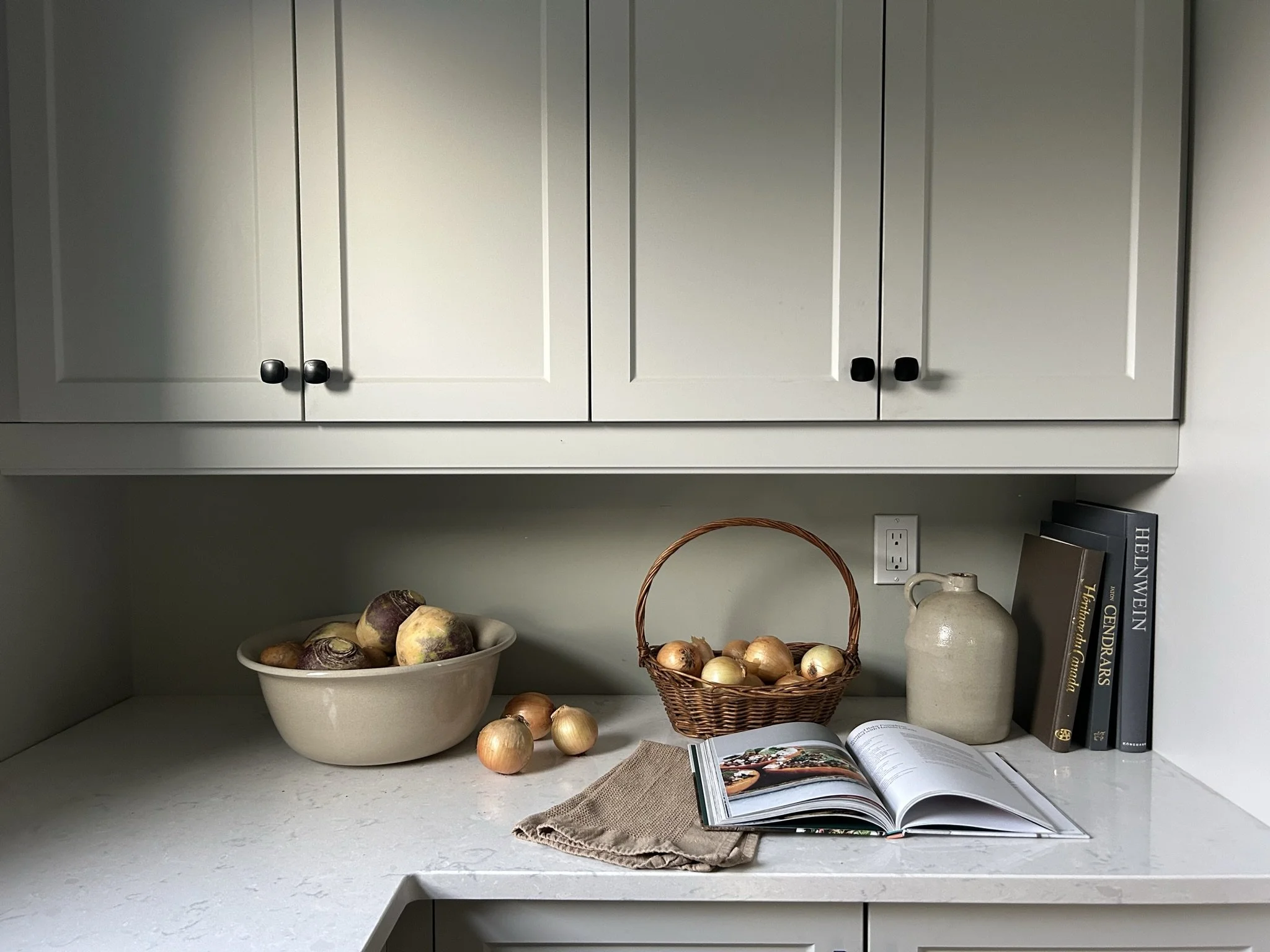
Some of the biggest frustrations in an old kitchen live inside the walls. One outlet for the whole counter. An extension cord behind the kettle. A single overhead light that leaves the counters in shadow.
These are the kinds of things clients tell us they love most once a renovation is done, and they need to be planned early, before walls are closed up. We wrote about a few of them in The Renovation Upgrades Our Clients Love Most.
It’s also a big part of why a renovation needs a designer, not just a contractor. Layout, storage, lighting and outlets all work together, and it’s much easier to get them right on paper first.
Start a list
You don’t need to be ready to renovate to start paying attention.
Keep a notebook in a kitchen drawer this winter. On one page, write what you love about the room. On the other, what’s not working. Add to it as you cook, as people come and go, as the holidays fill the house.
By spring, that list will tell you more about what your kitchen needs than any Pinterest board. And when you’re ready to talk about it, it’s exactly what we’d want to see.
If you’re just starting to think about a renovation, our free Century Home Design Guide is a good first step. And if your kitchen has been on your mind, we’d love to hear about it. Tell us about your home here.